
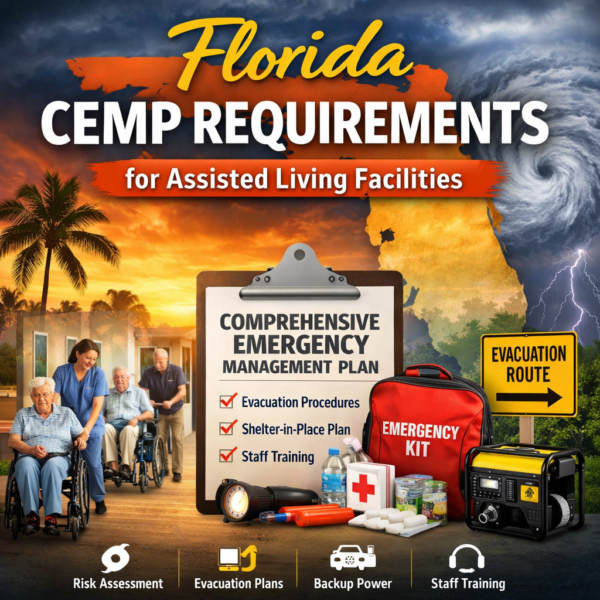
Florida CEMP Requirements for Assisted Living Facilities: What You Must Know
When it comes to operating an assisted living facility in Florida, compliance isn’t optional—it’s essential. One of the most critical components of regulatory compliance is meeting the Florida CEMP Requirements.
If you’re an owner, administrator, or planning to open a facility, understanding these requirements can protect your residents, your license, and your business.
Let’s break it down in a simple, actionable way.
What Is a CEMP?
A Comprehensive Emergency Management Plan (CEMP) is a detailed, written plan that outlines how your assisted living facility will prepare for, respond to, and recover from emergencies.
In Florida, emergencies aren’t just theoretical. Hurricanes, floods, power outages, and extreme heat are real risks. That’s why the state takes Florida CEMP Requirements very seriously.
Why Florida CEMP Requirements Matter
Failing to meet Florida CEMP Requirements can lead to:
- Fines and citations
- License suspension or denial
- Increased liability during emergencies
- Risk to resident safety
On the flip side, a strong CEMP:
- Protects residents and staff
- Builds trust with families
- Keeps your facility inspection-ready
What Must Be Included in a CEMP?
To meet Florida CEMP Requirements, your plan must cover these key areas:
1. Risk Assessment
You must identify potential hazards such as:
- Hurricanes
- Flooding
- Power outages
- Fires
Your plan should show that you understand your facility’s specific risks.
2. Evacuation Procedures
Your CEMP must clearly explain:
- When to evacuate
- Where residents will go
- Transportation arrangements
- Staff responsibilities
Evacuation partners must be pre-approved and documented.
3. Shelter-in-Place Plan
Sometimes evacuation isn’t possible. Your plan should include:
- Backup power sources
- Food and water supplies
- Medical care continuity
- Safe areas within the facility
4. Communication Plan
You need a clear system for communication with:
- Staff
- Residents’ families
- Local emergency management agencies
Include contact lists and backup communication methods.
5. Staff Training
Your team must be trained on:
- Emergency procedures
- Resident evacuation assistance
- Equipment use
Training must be documented and updated regularly.
6. Recovery Plan
After the emergency, your plan should address:
- Returning residents safely
- Facility repairs
- Documentation and reporting
Approval Process for Florida CEMP Requirements
Here’s how it typically works:
- Develop your CEMP
- Submit it to your local emergency management office
- Wait for review and approval
- Make revisions if required
Approval is not optional—your facility must have an approved CEMP to operate legally.
How Often Should You Update Your CEMP?
Florida CEMP Requirements expect facilities to:
- Review annually
- Update after major changes (ownership, structure, capacity)
- Revise based on new risks or regulations
Keeping your plan updated is just as important as having one.
Common Mistakes to Avoid
Many facilities struggle with compliance because of simple errors:
- Using outdated templates
- Missing evacuation agreements
- Incomplete contact information
- Lack of staff training documentation
Avoiding these mistakes can save you from costly penalties.
Pro Tips for Staying Compliant
- Keep a digital and printed copy of your CEMP
- Conduct regular drills
- Build strong relationships with local emergency management
- Assign a compliance lead in your team
Final Thoughts
Meeting Florida CEMP Requirements isn’t just about passing inspections—it’s about protecting lives.
A well-prepared facility stands out, builds trust, and operates with confidence—even during emergencies.
If you want to stay ahead, treat your CEMP as a living document, not just a one-time requirement.