
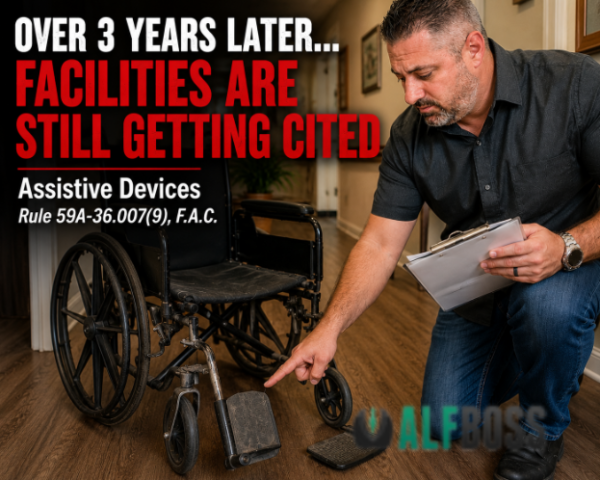
THE REGULATION THAT’S BEEN AROUND FOR OVER TWO YEARS…
And Facilities Are Still Getting Cited
Rule 59A-36.007(9), F.A.C. – Assistive Devices
On August 16, 2021, Florida implemented one of the most overlooked assisted living regulations in recent years: Rule 59A-36.007(9), Assistive Devices.
At this point, the regulation has been in effect for well over two years.
There are no more excuses.
Yet during mock surveys, I continue to see facilities struggling with the same issues:
- Assistive devices are not documented.
- Wheelchairs, walkers, and rollators are in poor condition.
- Staff have never been trained on the devices residents use every day.
- Facilities have no written policy and procedure.
- Administrators cannot show any system for monitoring assistive devices.
The regulation is actually very straightforward, but like many deficiencies, facilities get into trouble because they do not have a system.
What Is An Assistive Device?
An assistive device is any device designed to help a resident:
- Perform a task or activity of daily living
- Transfer safely
- Prevent a fall
- Recover from a fall
Examples include:
- Wheelchairs
- Walkers
- Rollators
- Canes
- Shower chairs
- Tub benches
- Medical alert pendants
- Lift chairs
- Standing assist devices
If residents are using these devices in your facility, you are responsible for ensuring they are used safely.
What The Regulation Requires
1. Have Written Policies and Procedures
Rule 59A-36.007(9)(a) requires facilities to maintain policies and procedures addressing:
- Assessment of assistive devices
- Identifying devices that may create a hazard
- Repair procedures
- Replacement procedures
- Ongoing monitoring for resident safety
If AHCA asks to see your assistive device policy, you should be able to produce it immediately.
2. Document Every Assistive Device
Rule 59A-36.007(9)(b) requires documentation of each assistive device used by a resident.
One of the easiest ways to demonstrate compliance is to ensure the device is documented on the resident’s:
- Health Assessment (Form 1823)
- Service Plan
- Resident Record
If a resident uses a wheelchair, walker, rollator, cane, shower chair, or other assistive device, make sure it appears on the 1823 whenever applicable.
3. Train Direct Care Staff
Rule 59A-36.007(9)(c) requires direct care staff who assist residents with these devices to know how to properly operate and utilize them.
Training should include:
- Proper use of wheelchairs
- Walker safety
- Rollator operation
- Brake usage
- Transfer assistance
- Reporting damaged equipment
- Infection control procedures
A staff member should never be using a device with a resident if they have not been trained on that device.
4. Keep Devices Clean and Safe
Rule 59A-36.007(9)(d) requires all assistive devices to be:
- Clean
- In good repair
- Free of hazards
During your next walk-through, take a close look at the devices residents are using.
Ask yourself:
- Do wheelchair brakes work?
- Are walker legs stable?
- Are cane tips worn out?
- Are rollator brakes functioning?
- Are shower chairs secure?
- Are there loose screws or damaged parts?
These are exactly the types of issues AHCA may identify during a survey.
The Missing Piece: A Tracking System
One of the best practices I recommend is maintaining an Assistive Device Log.
The log should include:
- Resident name
- Type of device
- Date implemented
- Purpose of the device
- Inspection dates
- Repairs completed
- Date discontinued
This gives the facility a clear system for monitoring compliance and demonstrates oversight if AHCA asks questions.
Action Steps
Review Your 1823 Forms
Make sure assistive devices are documented whenever applicable.
Review Your Policies
If your assistive device policy has not been updated since this regulation took effect, now is the time.
Train Your Staff
Ensure every direct care employee understands how to safely use the devices residents depend on every day.
Inspect Every Device
Conduct a facility-wide inspection of:
- Wheelchairs
- Walkers
- Rollators
- Canes
- Shower chairs
- Other assistive devices
Document any repairs or replacements needed.
This regulation has been in effect since August 16, 2021.
AHCA expects facilities to have policies, documentation, staff training, and a system for monitoring assistive devices.
The facilities that perform well during surveys are not scrambling to figure this out when surveyors arrive.
They already have a process in place.
And when it comes to assistive devices, resident safety starts with that process.