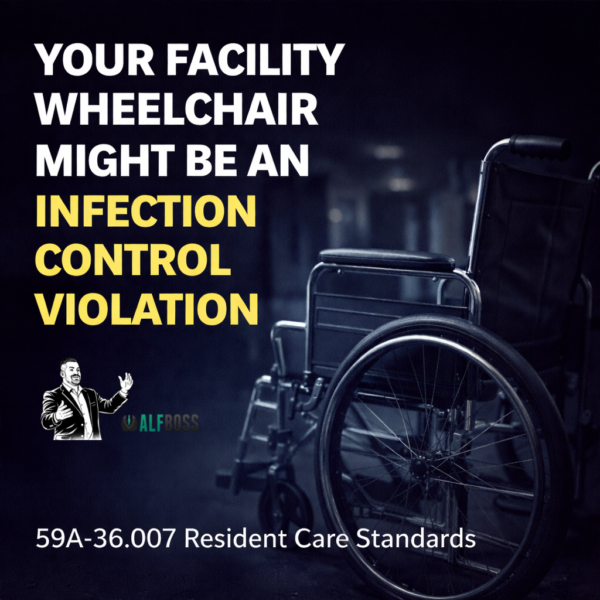
A “House Wheelchair” Is a Communal Assistive Device
Even if it’s only used occasionally, once that wheelchair is used for more than one resident, it is considered a communal assistive device.
That means it must be:
- Cleaned and disinfected
- Before each use
- After each use
- According to manufacturer recommendations
This is not optional. It is an infection control requirement.
Where Facilities Get Into Trouble
Here’s what surveyors often see:
- A wheelchair used for Resident A
- Then used for Resident B
- Then Resident C
- No disinfecting in between
During survey, if AHCA observes communal equipment being reused without cleaning, it can result in a citation under 59A-36.007 (10)(c).
Why It Matters
Wheelchairs are high-contact equipment. Think about the surfaces:
- Armrests
- Push handles
- Footrests
- Seat cushions
- Brakes
Each of these can transfer pathogens from one resident to another if not properly disinfected.
Infection control deficiencies are taken seriously because they directly impact resident health and safety.
Simple Fixes That Prevent Citations
This is not complicated — but it must be consistent.
Facilities should:
- Keep disinfectant wipes accessible near communal devices
- Train staff that cleaning must occur between every resident
- Follow manufacturer cleaning instructions
- Reinforce expectations during rounds
If the wheelchair is communal, it must be treated like communal medical equipment.
Bottom Line
That “extra wheelchair” sitting in the hallway may seem harmless. But if it’s shared and not disinfected between residents, it can quickly become an infection control violation.
Under 59A-36.007 (10)(c), cleaning before and after each use is required — not recommended.
👉 Administrator Question:
If AHCA observed your house wheelchair being used for multiple residents today, would your staff disinfect it between each use without being prompted?
If the answer isn’t a confident yes, this is a compliance risk that can be corrected immediately.