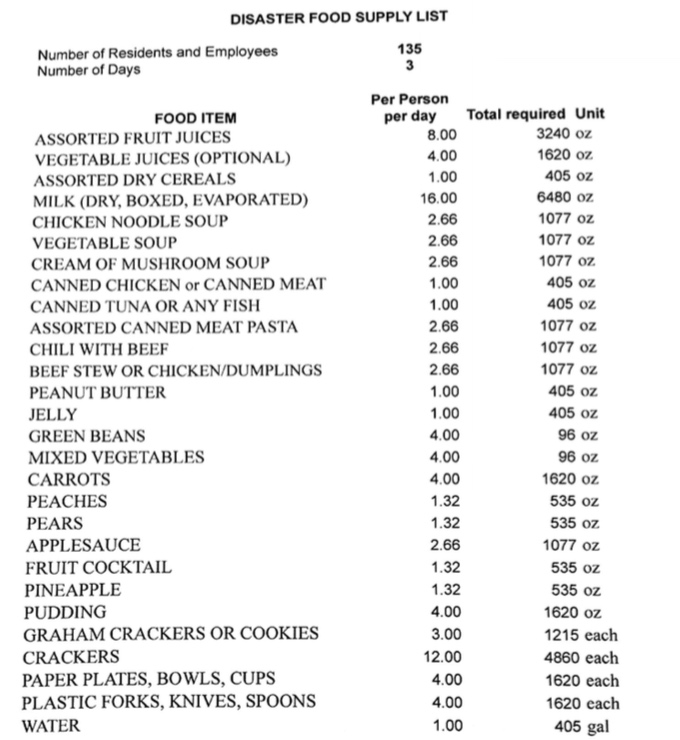
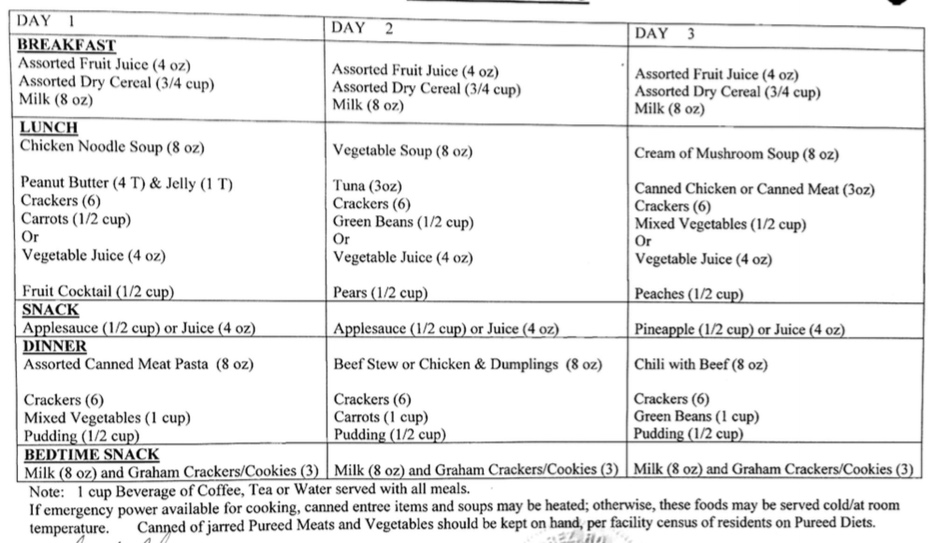
Florida assisted living facilities must keep at least a 3-day supply of nonperishable food on hand at all times. The amount is based on the number of weekly meals you have contracted to serve. Base the quantity on your current resident census, not your licensed capacity.
The food must be safe to store without refrigeration. You must also store enough water for drinking and food preparation, or have a written plan to obtain it. AHCA generally looks for about one gallon of water per person per day for three days.
This requirement comes from Rule 59A-36.012, cited on surveys as tag A0093. The most common deficiencies are expired items and quantities that no longer match the census. Keep it stored in a cool, dry place. Check and rotate your supply regularly, especially before hurricane season.
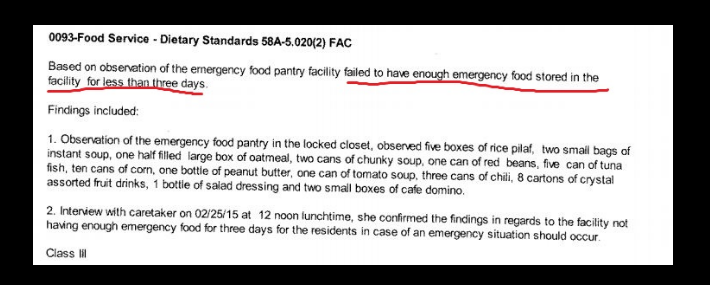
You never know when a disaster at your facility might strike. When we think of disaster’s in Florida the first thing that pops up in our mind is Hurricanes. Although in Florida we are in a Hurricane zone facilities face many other incidents’s that could require your facility to use its Emergency food supply. Examples include fire, long power outages,tornadoes, gas leaks,plumbing, nd water main issues. Any of these can strike your facility at any time and your facility needs to be prepared.
When it comes to your facilities Emergency food supply the biggest issues you face are:
- Making sure you have the required amount of supplies on hand
- Making sure there are no expired items in your supply
- Keeping yourself and dietary staff from using items in your supply for kitchen use.
Regulation
Title Food Service – Dietary Standards Statute or Rule 58A-5.020(2)FAC
(h) A 3-day supply of nonperishable food, based on the number of weekly meals the facility has contracted with residents to serve, must be on hand at all times. The quantity must be based on the resident census and not on licensed capacity. The supply must consist of foods that can be stored safely without refrigeration. Water sufficient for drinking and food preparation must also be stored, or the facility must have a plan for obtaining water in an emergency, with the plan coordinated with and reviewed by the local disaster preparedness authority

Ways to avoid Deficiencies regarding your Emergency Food supply.
- Have a menu and supply list created by a licensed dietitian.
- Make a list of your on hand emergency supplies and write down the expiration dates.
- Make it the facilities policy to not use any emergency food unless its an emergency and if used reorder immediately.
- Schedule Audits of the emergency supplies at least quarterly on a calendar/planner (make sure supplies are on hand and review expiration dates and reorder as necessary)