
STOP HIDING MEDICATIONS IN FOOD
“They Spit Out Their Medications” Is Not An Exception
Rule 59A-36.008, F.A.C. – Medication Practices
This is one of the most common medication issues I encounter during mock surveys.
A resident with Alzheimer’s disease or another form of dementia becomes resistant to taking medications. They may refuse them, spit them out, hide them in their cheek, or simply refuse to swallow them.
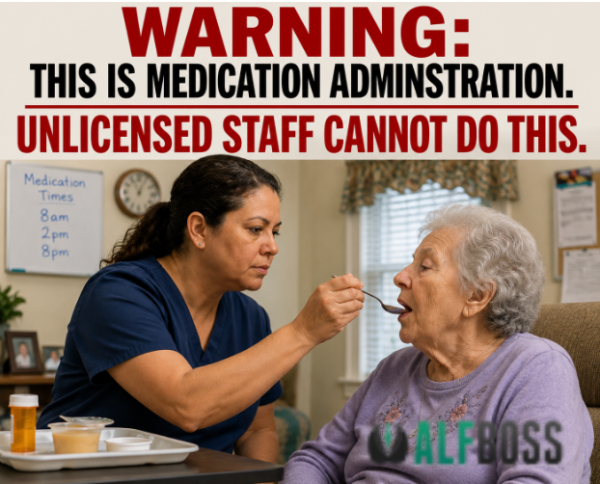
Wanting to help, staff sometimes crush the medication and mix it into applesauce, pudding, yogurt, or other foods.
The resident is then fed the food containing the medication.
The problem?
This is no longer medication assistance.
This is medication administration.
And under Florida assisted living regulations, unlicensed staff cannot administer medications.
Assistance vs. Administration
One of the most misunderstood concepts in assisted living is the difference between assisting with self-administration and administering medication.
Florida regulations allow trained unlicensed staff to assist residents with self-administration of medications.
Examples of assistance may include:
- Bringing medications to the resident
- Opening containers
- Reading medication labels
- Placing medication in the resident’s hand
- Assisting with the preparation of medications as permitted by regulation
- Observing the resident take their medication
However, there is a line that cannot be crossed.
When staff become the person actually administering the medication into the resident’s body, they have moved beyond assistance.
At that point, they are administering medication.
The Dementia and Alzheimer’s Situation
Let’s talk about the situation I see most often.
A resident with dementia refuses medication.
The resident spits it out.
The resident refuses to swallow.
The resident becomes combative when medications are offered.
To avoid missing the medication, staff crush it and hide it in food.
The resident is then fed the food without knowing the medication is present.
Many staff members believe they are helping the resident.
However, from a regulatory standpoint, the staff member is now administering medication.
This is not considered assistance with self-administration.
If a resident is unable or unwilling to knowingly take medications, the facility should work with the resident’s physician, family, hospice provider, home health provider, or licensed nursing personnel to determine the appropriate plan of care.
The solution is not for unlicensed staff to secretly administer medications through food.
What Unlicensed Staff Cannot Do
Under Rule 59A-36.008, F.A.C., unlicensed personnel may not perform functions that constitute medication administration.
Examples include:
- Placing medication directly into a resident’s mouth
- Putting medication on a spoon and feeding it directly to a resident
- Crushing medication and mixing it into applesauce, pudding, yogurt, or other foods and then feeding it to a resident
- Administering injections
- Filling syringes
- Administering medications through injectable routes
- Calculating medication dosages
- Compounding medications
- Exercising clinical judgment regarding medication administration
- Administering medications that require professional nursing judgment
These situations are commonly seen in residents with Alzheimer’s disease and other forms of dementia who may refuse medications, spit them out, or have difficulty understanding the medication process.
While staff are often trying to help, directly placing medication into a resident’s mouth or feeding medication to a resident on a spoon is medication administration, not assistance with self-administration.
Medication administration is the responsibility of licensed personnel.
Medication assistance is the responsibility of trained unlicensed personnel.
There is a significant difference between the two.
Why This Matters
This is not simply a technicality.
Medication administration carries risks.
Residents have the right to know what medications they are receiving.
They also have the right to refuse medications.
When staff hide medications in food and feed them to residents, the facility may create both regulatory concerns and resident rights concerns.
Surveyors take these situations seriously because they involve medication practices, resident safety, and resident autonomy.
Action Steps
Observe Medication Passes
Watch how medications are being provided to residents.
Pay special attention to residents with dementia who frequently refuse medications.
Educate Your Staff
Make sure caregivers and medication technicians understand the difference between:
- Assisting with self-administration
- Administering medication
Many staff members simply do not realize they have crossed the line.
Review Your Policies
Your medication policies should clearly address what unlicensed staff can and cannot do when assisting residents with medications.
Address Refusals Properly
If a resident routinely refuses medications, work with the physician and other appropriate healthcare professionals to determine the proper course of action rather than creating workarounds that place the facility at risk.
I understand why staff do it.
They want the resident to receive the medication.
They are trying to help.
But good intentions do not change the regulation.
Whether the medication is placed directly into the resident’s mouth, given on a spoon, or hidden in food and fed to the resident, the act is medication administration and cannot be performed by unlicensed staff.
That is not medication assistance.
And under Rule 59A-36.008, F.A.C., medication administration must be performed by licensed personnel.