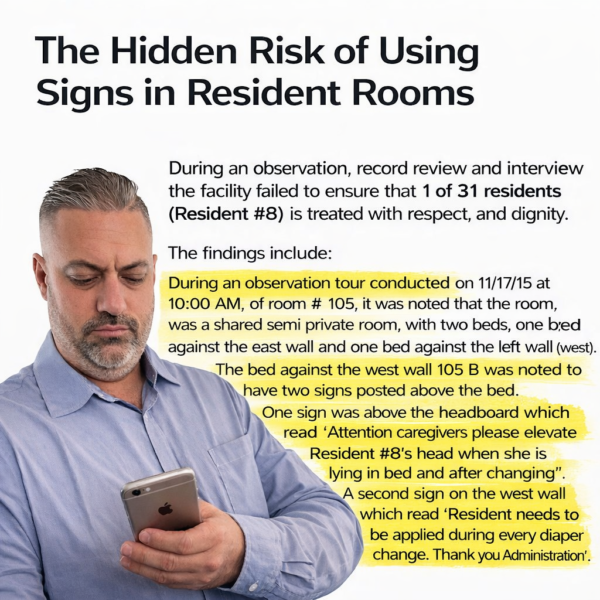
The Hidden Risk of Using Signs in Resident Rooms
In assisted living, clear communication between staff is essential. When residents require specific care, teams often look for quick ways to share reminders. One common shortcut? Posting notes or signs inside resident rooms.
It may seem helpful—but it can actually create serious problems.
Why This Practice Backfires
At first glance, putting up a sign feels practical. It keeps instructions visible and easy to follow during busy shifts. But resident rooms are not just workspaces—they are private living areas.
Displaying care-related information in these spaces can unintentionally cross a line.
Privacy Comes First
Every resident has the right to live with dignity and privacy. When personal care details are written on signs and placed in open view, that information becomes accessible to:
-
Visitors
-
Other residents
-
Anyone entering the room
Even small details can be considered sensitive. What seems like a harmless reminder to staff may be viewed as a privacy violation during an inspection.
What Surveyors Look For
Regulatory surveyors are trained to identify anything that compromises resident rights. Visible signage in rooms can raise immediate concerns, such as:
-
Exposure of confidential care information
-
Lack of respect for personal space
-
Improper communication practices
This can quickly lead to citations—even if your intentions were good.
A Smarter Way to Keep Staff Informed
Instead of relying on room signage, shift to communication methods that protect privacy while keeping your team aligned.
Use Structured Documentation
Ensure all care instructions are clearly written in care plans and regularly updated.
Implement Shift Communication Tools
Use communication logs, digital systems, or handoff reports to pass information between shifts.
Train Staff Consistently
Make sure your team understands why visible reminders in resident rooms are not acceptable—and what to do instead.
Keep Information Secure
Only share resident-specific details through approved, private channels.
Check Your Environment
Take a few minutes to walk through your facility and look closely. You might find signs posted:
-
Near beds
-
On walls or doors
-
Inside bathrooms
These may have been placed with good intentions, but they should be removed to stay compliant.
The Bottom Line
Quality care is not just about meeting needs—it’s about respecting boundaries.
By choosing better communication systems, you protect your residents’ dignity, reduce compliance risks, and create a more professional care environment.