
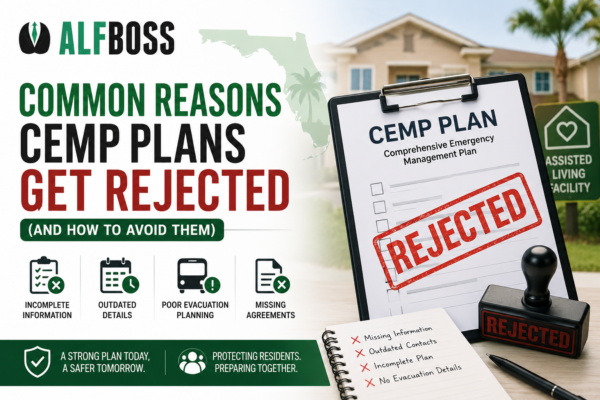
Common Reasons CEMP Plans Get Rejected (And How to Avoid Them)
Running an assisted living facility in Florida means being prepared for emergencies at all times. One of the most important requirements for compliance is having a properly completed Comprehensive Emergency Management Plan (CEMP). Unfortunately, many Florida assisted living facilities experience delays, corrections, or outright rejections because of avoidable mistakes in their CEMP submissions.
Understanding the common reasons plans get rejected can save facility owners and administrators time, stress, and costly delays during the licensing or renewal process.
What Is a CEMP Plan for Florida Assisted Living Facilities?
A Comprehensive Emergency Management Plan (CEMP) is a state-required emergency preparedness plan designed to protect residents, staff, and visitors during disasters or emergencies. Florida ALFs must submit their CEMP to the local emergency management agency for review and approval.
The plan covers situations such as:
- Hurricanes
- Flooding
- Fires
- Power outages
- Infectious disease outbreaks
- Evacuations
- Shelter-in-place procedures
Because many assisted living residents require additional care and support, emergency planning standards for Florida ALFs are strict and detailed.
Why CEMP Plans Get Rejected
1. Missing Required Information
One of the most common reasons for rejection is incomplete documentation. Facilities often leave out critical details such as:
- Emergency contact lists
- Transportation arrangements
- Shelter locations
- Staffing plans during emergencies
- Resident evacuation procedures
Even one missing section can delay approval.
How to Avoid It
Before submitting your plan, carefully review every required section. Use a checklist to confirm all forms, attachments, and signatures are included.
2. Outdated Policies or Contact Information
Emergency management agencies regularly see plans containing outdated phone numbers, old vendor agreements, or previous administrator information.
If your transportation company changed or your alternate shelter is no longer available, your plan may be rejected immediately.
How to Avoid It
Review and update your CEMP annually and anytime major operational changes occur, including:
- Administrator changes
- New vendors
- Building renovations
- Capacity changes
- New evacuation locations
Always verify contact information before submission.
3. Evacuation Plans Are Too Vague
Florida agencies expect detailed evacuation procedures — not general statements.
A plan that simply says “residents will be evacuated if necessary” is not enough.
Facilities must explain:
- Where residents will go
- How transportation will be arranged
- How medications and medical records will be transported
- How residents with mobility issues will be assisted
- Staff responsibilities during evacuation
How to Avoid It
Create step-by-step evacuation procedures tailored to your facility. Include realistic timelines, transportation agreements, and staff assignments.
4. Lack of Resident-Specific Planning
Every assisted living facility serves residents with different levels of care needs. Generic emergency plans that do not address resident acuity often fail review.
For example, agencies want to know how your facility will assist residents who:
- Use wheelchairs
- Require oxygen
- Have memory impairment
- Need medication assistance
- Require continuous supervision
How to Avoid It
Customize your CEMP around your resident population and current services provided by your facility.
5. Transportation Agreements Are Missing or Incomplete
Transportation is one of the biggest issues during emergency evacuations in Florida.
Many facilities submit plans without signed transportation agreements or with vendors that cannot realistically handle the resident count.
How to Avoid It
Make sure transportation agreements include:
- Company information
- Number of vehicles available
- Wheelchair accessibility
- Emergency availability
- Current signatures and dates
Keep backup transportation options documented as well.
6. Shelter Information Does Not Meet Requirements
Some facilities list shelters that are too far away, unavailable during disasters, or unable to accommodate assisted living residents.
Emergency management reviewers verify these details carefully.
How to Avoid It
Choose approved shelter locations that can properly support your residents’ medical and personal care needs.
Document:
- Shelter addresses
- Contact persons
- Capacity information
- Special accommodations available
7. Failure to Follow Florida County Requirements
Each Florida county may have slightly different submission requirements or formatting expectations.
A plan that works in one county may require modifications in another.
How to Avoid It
Always check with your local emergency management office before submitting your CEMP. Confirm:
- Required forms
- Submission format
- Supporting documents
- Review timelines
- Local updates or changes
8. Generic Templates Without Customization
Using a copied template without adapting it to your facility is a major red flag.
Reviewers can quickly identify plans that are overly generic or inconsistent with actual operations.
How to Avoid It
Your CEMP should reflect your specific:
- Facility layout
- Resident population
- Staffing structure
- Services provided
- Emergency resources
A customized plan improves both compliance and resident safety.
9. Inconsistent Information Throughout the Plan
Another common issue is conflicting information in different sections of the plan.
For example:
- Different resident census numbers
- Conflicting evacuation locations
- Incorrect administrator names
- Different transportation vendors listed
These inconsistencies create delays and requests for corrections.
How to Avoid It
Review the entire document carefully before submission to ensure all sections match and remain current.
10. Failure to Conduct Annual Reviews and Training
Florida assisted living facilities are expected to maintain active emergency preparedness practices — not just submit paperwork once.
Facilities without documentation of annual reviews, staff training, or emergency drills may face compliance concerns.
How to Avoid It
Maintain records for:
- Annual CEMP reviews
- Staff emergency training
- Fire drills
- Hurricane preparedness exercises
- Evacuation practice procedures
Keeping documentation organized helps during inspections and renewals.
A rejected CEMP plan can delay licensing, create compliance problems, and place unnecessary stress on facility operations. The good news is that most rejections happen because of preventable mistakes.
Taking the time to create a detailed, accurate, and customized emergency management plan helps protect your residents while keeping your Florida assisted living facility compliant.
If your facility is preparing a new CEMP submission or updating an existing plan, focusing on accuracy, organization, and Florida-specific requirements can make the approval process much smoother.