
Florida assisted living facilities holding a standard, limited mental health, or limited nursing license cannot admit a resident who uses a peg tube. This restriction applies regardless of the resident's other care needs or the family's preference to keep them in the facility.
The limitation exists because peg tube feeding requires a level of nursing care beyond what these license types authorize. Facilities that admit or retain such a resident risk a licensure violation and possible enforcement action from AHCA during a routine or complaint-driven survey.
Administrators should screen for feeding tube needs during intake and confirm which license category the facility holds before admission. Staff should also understand which caregiver roles, such as a PCA or home health aide, may legally assist with tube feeding tasks under Florida rules.
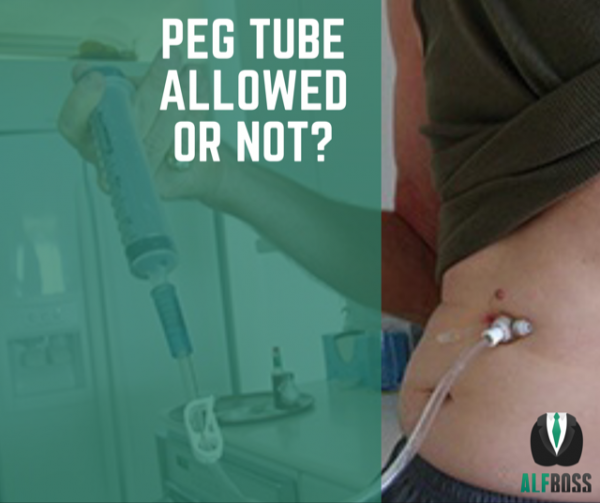
I get this question many times a month. Can I have a resident in my ALF who has a Peg Tube? Before I get into the details of yes or no. I would advise in my personal opinion that you not venture into this type of care as a lot of liability and risk are attached to providing and housing a resident with a Peg Tube.
The following answer below is not my opinion or even my words. The answer below is directly from AHCA in a letter that was sent out to ALF’s in 2011
QUESTION Peg tubes in ALFs
ANSWER:
Excerpt from letter sent to ALF providers on April 28, 2011 Assisted Living Facilities with Standard, Limited Mental Health or Limited Nursing Service Licenses:
A resident utilizing a peg-tube may not be admitted to an assisted living facility with a standard, limited mental health or limited nursing service license. If, after admission, a resident s condition changes and a peg-tube is ordered, the resident may remain in the facility if all of the following conditions are met:
1. The resident is terminally ill;
2. The resident is admitted to hospice and agrees to the services offered by a licensed hospice;
3. The resident agrees to remain at the facility (the resident must be an existing resident);
4. The administrator agrees to the resident remaining at the facility;
5. An interdisciplinary plan is developed and implemented; and
6. The resident is under the care of a physician who agrees that the physical needs of the resident are being met.
At no time may unlicensed staff, friends, family members or volunteers provide services or care that would involve the administration of medication, assistance with self-administration of medication via a peg-tube or assistance with feedings via a peg-tube. Unlicensed facility staff, friends, family members and volunteers are also precluded from removing, cleaning or adjusting a resident s peg-tube. See, 429.26(9), Florida Statutes, and 58A-5.0181(4)(c), Florida Administrative Code.
Extended Congregate Care Specialty License: An assisted living facility, which has an extended congregate care specialty license, may accept and provide for residents utilizing a peg-tube. However, at no time may unlicensed staff provide the services or care that would involve the administration of medication, assistance with self-administration of medication via a peg-tube or assistance with feedings via a peg-tube.